


Cholesterol is a nutrient; it’s not a disease
Medicine loves to hate a bad guy. Something we can band together to fight against: cancer,
dementia, and heart disease. In an attempt to defeat heart disease, we have been waging war on fat and cholesterol for six decades under the lipid hypothesis. This theory was proposed by Dr. Ancel Keys and suggested that elevated blood cholesterol, specifically Low Density Lipoprotein (LDL), causes coronary heart disease (CHD) by promoting atherosclerosis, narrowing of the arteries. But did we choose the wrong bad guy? I defend that cholesterol is a nutrient, it’s not a disease.
No one can deny that cholesterol is a structural and functional molecule needed by all
vertebrate animals; no cholesterol, no life. Although we are the earth’s apex predator, we are the only species that has a newly acquired, conditioned fear of eating cholesterol and saturated fat. Instead, lions, polar bears, dolphins and other obligate carnivores eat fatty meat to their heart’s content, never stopping to wonder if it will “kill them” or make them fat. And yet these wild, carnivorous animals do NOT suffer from obesity nor succumb to heart attacks or strokes. It’s as if they EVOLVED to eat fat and protein for optimal health! Our ancestors knew this, too. I fondly remember watching my independent 101-year-old great-grandmother enjoy her own homemade beef stew, with an inch of fat floating on top. She probably never had a lipid panel drawn, had no idea about cholesterol or saturated fat, nor would she care. So what changed between her generation and now? Everything.
But first, let’s get the science straight. I am grateful to Dr. Malcolm Kendrick for his extensively investigated and entertaining book, “The Clot Thickens.”1 I highly recommend it for those curious about heart disease. Kendrick brilliantly exposes the holes in the lipid hypothesis. He puts forth an alternative theory that originated when Karl von Rokitansky proposed his "thrombogenic (blood clotting) theory” of atherosclerosis in 1852. The following is my humble summary of their works.
What is Cholesterol
Cholesterol is a fat-soluble molecule with a chemical formula, C27H46O. We need cholesterol to make each of our 40 trillion cell membranes, our sex hormones, cortisol, aldosterone, vitamin D and bile acids. If we don’t eat enough cholesterol, our body will make it because we cannot function without it. Our brain is our fattest organ, made of 60% fat and houses over 25% of the body’s total cholesterol. The cholesterol we eat doesn’t go to the brain. Instead, cholesterol is made on site in the brain through the supportive glial cells, producing cholesterol to wrap every neuron in an insulating myelin sheath.

However, like oil in water, cholesterol does not dissolve in blood, so it needs to be enclosed in a special transporter shell, called a lipoprotein. There are many different lipoprotein transporters, but the one your doctor is worried about is called LDL or low-density lipoprotein. LDL is made in the liver to carry this precious cargo of cholesterol and energy-providing triglycerides around the body. On the surface of each LDL particle is one molecule of an essential recognition key called apoB-100. If your LDL is high, your apo B will also be high. This apo B molecule is needed to attach to LDL receptors on each of our 40 trillion cells. Once attached, the LDL then offers up its contained cholesterol cargo to allow the receiving cell to make a whole host of essential components. When cells die and get replaced, our body makes HDL to bring the used cholesterol back to the liver for recycling.

In the vast majority of people, the dietary cholesterol we consume does not cause an increase in LDL. In 2013, the American Heart Association (AHA) quietly, unceremoniously removed the cholesterol warning (perhaps they didn’t want to admit they had given bad advice since 1961). Then, in 2015, the Dietary Guidelines Advisory Committee concluded that "available evidence shows no appreciable relationship between consumption of dietary cholesterol and serum cholesterol" and also removed the 35% cap on calories from fat.
2 But this didn’t make front page news, your doctor probably didn’t tell you, and you probably are still scared to eat cholesterol and the fat on your meat! So what is the role of LDL in heart disease? First, let’s look at how the heart functions.
Heart and Blood Vessels: Structure and Disease
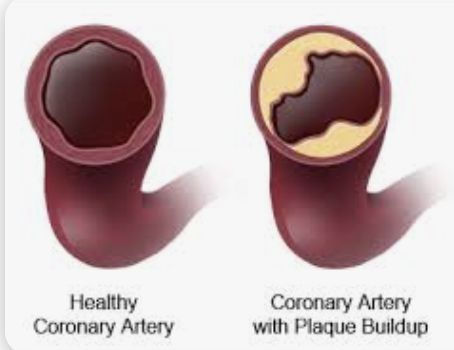
Our heart is a sack of blood that never empties, but the non-stop tissues of the heart get blood supplied like every other organ: through arteries. The first arteries that leave the aorta provide the heart muscle with its blood supply through the left main and right coronary arteries. Although hearts can have many different diseases, when we discuss heart disease, we usually mean coronary heart disease, the narrowing of the arteries, also known as atherosclerosis. And although heart disease has been the number one killer of humans for almost 100 years, medicine only has theories, not certainty, as to how it develops. The “lipid hypothesis” we have used for the last 60 years suggests that LDL magically passes into the artery wall and becomes trapped, a fanciful suggestion given that all other substances must pass with specific pumps and receptors.

We know that these plaques are arterial narrowings that develop and build along the inner layer (aka the lumen) of the heart’s arteries. As blood flow is reduced, symptoms progress over timelike shortness of breath and chest discomfort with activity. This is known as angina.
However, this isn’t always the case- some have no symptoms until their heart attack. This heart attack occurs when the plaque gets disturbed and a blood clot forms, completely blocking off blood flow to this nutrient-hungry organ.
This usually creates significant symptoms with chest heaviness, difficulty breathing and for some, sudden cardiac death. Many know that heart attacks are a blood-clotting problem. When people come to the hospital with a heart attack, we promptly work on the clot. We give a blood thinner (chew ASA tablets) and then we give a “clot buster” to open up blood flow in the blocked artery.
This is a lot of information, and I want to keep things digestible. I hope I have given you a new view of cholesterol and heart disease. Medicine’s cholesterol villain is actually quite vital. I will end this newsletter with a “what happens next” cliffhanger. You won’t want to miss the details of the real villains and the thrombogenic theory of heart disease.
See you in June. And in the meantime, stay meaty!
References:
1)Kendrick, M. (2021). The Clot Thickens: The enduring mystery of heart disease. Columbus
Publishing Ltd.
3) Lichtenstein AH. Dietary Fat and Cardiovascular Disease: Ebb and Flow Over the Last Half Century. Adv Nutr. 2019 Nov 1;10(Suppl_4):S332-S339. doi:10.1093/advances/nmz024.PMID:31728492


Comments